Tuesday, September 3, 2013

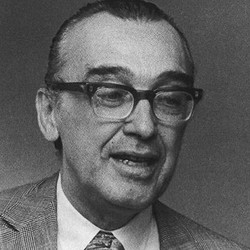
Randall Garrett – A Jovial Knight


Some memories by J. D. Crayne


Remarkably prolific, Randall Garrett was primarily a fantasy short-story writer and is probably best known for his Lord Darcy series, a collection of alternate world stories which appeared in pulp magazines from the 1960s through the late 1970s.  Recounting the adventures of a Plantagenet detective in a twentieth century world filled with magic that really works, the stories are filled with jokes and references to spy stories and to detective fiction in general.  Randall loved puns and word plays, and was as much of a Falstaffian character as any of those that he wrote about.
He wrote three other series of fantasy and science fiction stories (the Gandalara Cycle with Vicki Ann Heydron, the Nidorian series with Robert Silverberg, and the Sweet Little Old Lady series with Larry M. Harris), plus three novels, and a large number of non-series short stories.  He also wrote a handful of "Poor Willie" tales, a bunch of hilarious parodies, and some poetry. 

At least one of his poems, "Oh No, John!" (about the literary tastes of Astounding Science Fiction editor John W. Campbell) was set to music, and I remember sitting in hotel corridors late at night with a group of other aficionados, singing it while author David McDaniel played the guitar.  

Randall's first published story was Probability Zero in 1944 and a wealth of tales followed.  It's rather hard to tell exactly how many there were, because they were published under at least ten pen names – including David Gordon, Alexander Blade, Ivar Jorgensen, and Gerald Vance.  He wrote under pseudonyms primarily because his output flooded the available science fiction and fantasy markets, to the point where he often had two or three stories – under different pen names -- in the same magazine.  Bibliographers still occasionally turn up stories that they think might be by Garrett but can find no proof one way or another.

He was a tall, dark, rather heavy-set man, and was always good natured and jovial. When I first met him, he used the diminutive of his first name, but when he abandoned that for a more dignified appellation, one of his favorite quips was "Randy I may be, but Randall is my name!" I remember drinking with him and some others at a science fiction convention in Phoenix, Arizona where the convention was too large for one hotel and occupied blocks of rooms in two adjacent ones.  Both hotels had bars set up in their outdoor patios, under shade canopies, and there was a good flow of fans and pros between the two locations. Randall ordered a round of drinks, flashed his room key at the bartender, and signed the chit.  Unfortunately, as I realized a few moments later, we were not at the bar that belonged to the hotel where he was registered.  I hope that the hotels straightened it out.
That was during the era when wigs were fashionable for women and a lot of us traveled with one or two on convention jaunts, to keep from looking too frowzy during the course of a three (or even four) day con, especially when the trip was by car and sometimes from the Pacific to Atlantic coast. I was at one convention, talking with Randall and a female friend of his, when I realized that I had forgotten to fetch some papers from my hotel room.  Still talking, all three of us went upstairs.  When we got to my room, Randall spotted my wig sitting on the bureau and chivvied his friend into trying it on.  We agreed that it wasn't her style.  Whereupon Randall tried it on too.  It didn't suit him either.

He enjoyed parties and he loved costumes.  One time he came to a convention masquerade dressed in tights and doublet as a character from one of his own stories.  (That was before there were costume competitions.  The event was a costume ball; there was recorded music for dancing and attendees mingled together in a wonderfully exuberant kaleidoscope of science fiction and fantasy.) After the event, when we were socializing at a room party, Randall announced that he was leaving for a few minutes to get into more comfortable clothes because, "Unlike the hotel, this costume has no ballroom!" 
I had not seen Randall for a year or so before I ran into him at a convention in Los Angeles and we sat down to catch up on our respective lives.  He had been ordained as a priest by then, and told me a charming tale about going to an early morning service in a New York church.  The officiating priest of the large church cast a practiced eye over the assembled worshippers, estimated the number of people who would receive communion, and poured a very generous measure of wine into the communion cup.  Much to his horror, only four people – including Randall in a black suit and a clerical collar – stepped up to the communion rail.  When he got to Randall, who was at the end of the line, he had a nearly-full cup of consecrated wine and in a conspiratorial whisper pleaded, "Help me kill it!"
I asked Randall why he had become a priest.  He hadn't led what I would call a dissolute life, but it had been a hearty one and he had, I think, gotten a great deal of worldly joy out of it.  When I put the question to him, he replied simply, "I heard the Call."  There is no response to that.

Randall contracted encephalitis in 1979.  That was the end of his career.  I heard from mutual friends that he was ill, but did not realize how serious it was.  He was admitted to a facility in Texas, and a friend of ours who was driving from Los Angeles to the East Coast stopped by to see him.  It was too late.  He no longer recognized friends or remembered the past.  He died in 1987, at only sixty years of age. I hope that he passed, at the end, into a hearty Summerland of wine and laughter.
 

Monday, July 1, 2013

Remembering 2001: A Space Odyssey

Joe Vadalma is the author of several major science fiction and fantasy series including his Chronicles of Morgaine the Witch, the Raven Lenore, Psychic Investigator, the Books of Retslu, and the norish Isaac, the Android saga.


One of the best science-fiction movies of all time was Stanley Kubrick's 2001, A Space Odyssey.  Many people nowadays wonder what the big deal was with this movie. They have only seen it on the small screen. With digital special effects in more modern movies, the special effects seem ho-hum. In 1968, in a theatrical release, it was spectacular. I was one of the lucky ones who saw it in Cinerama in a wide-screen theatre.  It was nothing short of mind blowing.

The film deals with thematic elements of human evolution, technology, artificial intelligence, and extraterrestrial life, and is notable for its scientific realism, pioneering special effects, ambiguous imagery that is open-ended to a point approaching surrealism, sound in place of traditional narrative techniques, and minimal use of dialogue.

In my opinion such movies as Star Wars and Alien probably would not have been made were it not for the success of 2001. It was the first movie to show that a serious SF film with great special effects could draw a large audience. Perhaps one of the reasons for this was that the Apollo space program and other NASA space probes were gaining popularity. It was only a year later that Lance Armstrong and Buzz Aldrin stepped onto the surface of the moon. Four years later Pioneer 10 had reached the planet Jupiter.

For those of you who had never saw the movie, here is a synopsis (warning, it contains spoilers):  The movie starts millions of years ago when a group of subhumans are competing with tapirs and other homids for food. One morning a tall, thin, rectangular black monolith stands among the rocks. The apemen are excited but touch the object and calm down. By touching the monolith, they have learned to use bones as weapons and tools.  

In the next scene the action moves to the near future where travel to the moon is an every day affair. A similar monolith is found on the moon and sends a signal towards Jupiter.

Eighteen months later a manned spacecraft is sent to Jupiter to investigate. Two of the team are awake to run the ship with the aid of an almost human AI called HAL. The other three are in hibernation.  Hal announces that there is a problem with the AE-35 unit and it will fail with 100% certainty within 72 hours. The astronauts go EVA to replace the unit. The two astronauts scan the removed AE-35 unit but can't find any defects. Hal suggests putting it back in service to let it fail. Mission Control believes Hal has made an error because their HAL9000 unit, a twin to the one aboard Discovery, finds no flaw in the AE-35. Hal denies any chance of computer error. The astronauts go to a pod to have a private chat and decide to disable Hal's higher functions without disturbing the automatic ship control functions. Hal can see the men through the pod's window and reads their lips. When Poole goes out in the EVA pod, the pod murders him. When Dave uses a pod to recover Frank's body, a computer malfunction alert goes off and the life signs of the three hibernating astronauts flat line. Hal refuses to open the pod bay doors for Dave, explaining that he knows Dave is planning to disconnect him because he was able to read Frank and Dave's lips when they discussed it. He says the mission is too important to allow humans to jeopardize it. Dave releases Frank's body and maneuvers the pod to the emergency airlock hatch. He uses the pod's arms to open the door, holds his breath and jumps over to the ship. Dave goes to the computer room and shuts down HAL.  

A much larger black monolith floats in Jupiter orbit,. Bowman leaves the Discovery in another EVA pod and enters a wormhole. The pod ends up somewhere in time and space in a bedroom with luminous white walls and floor and furniture in the style of Louis XVI. Dave ages swiftly until he is a dying old man. A monolith appears and transforms him into a star child.

If all of this sounds sort of mundane, it is because there is no way to describe the marvelous cinematography, special effects, music and emotional impact of the movie.  
The idea for the movie was taken from an Arthur Clarke short story, The Sentinel. Clarke also wrote the script.

A sequel to the movie was released in 1984 called 2010: The Year We Made Contact starring Roy Schneider. The plot is based on Arthur Clarke's novel 2010: Odyssey Two.
It is a rather good movie itself, but nowhere as spectacular as 2001.

Tuesday, June 4, 2013

Van Vogt, Marlon Brando, Boris Karloff and Gilbert Gosseyn

I met A. E. Van Vogt just as he was experiencing the first onset of Alzheimer's. I had been brimming with so many questions about the deeper psychological currents that run throughout The World of Null-A. A novel which starts when the hero realizes he is not the person he believed himself to be and so sets out on a quest to discover who he is, a quest that reaches a culmination of some profundity for a science fiction novel of the 1940s. It is no coincidence that the protagonist of this futuristic tale is named Gilbert Gosseyn (go sane). The method by which he does so is soundly based on the science of the time, involving a "cortical-thalamic pause" and the application of non-Aristotelian thinking. Van, alas, could shed no light on the writing of his earlier books or what the intentions behind them were. He had forgotten it all.

What I want to share with you here is a little known sidelight on the cover of an early hardcover edition  of The World of Null-A.

Pulp magazine cover artists are never paid so well that they can afford to hire professional models. To make up for this lack, many artists, including the astounding Virgil Finley of Famous Fantastic Memories fame, copied photographs of movie stars because they were easy to come by free. Hence, if you will study below, you will see Marlon Brando as Van's mental superman, Boris Karloff as the villainous onlooker to his right, Barry Fitzgerald as the impish figure on the left, and a (by me) unidentified female star of the era on the right (though she is very familiar looking).


Jean Marie Stine
Co-Publisher
Futures-Past Editions
author, Herstory & Other Science Fictions, ebook and paperback


A. E. van Vogt Never tell yourself not to think!

Some memories by J. D. Crayne

Alfred Elton van Vogt was always known to his friends as "Van."  Although affable and easy to approach, he looked a trifle austere and I cannot recall ever seeing him wear anything but a dark suit and what my husband liked to call a "sincere" tie.  His voice was a pleasant baritone and he had a mellow laugh that seemed to spring from honest surprise at humanity with all of its foibles. He was also a very handsome man, tall, dark-haired, with a clean-cut profile.
In an era when most science fiction was of the "first contact" sort, with cookie-cutter heroes battling rubber-suited aliens, Van wrote about characters with intelligence, characters who had feelings and who understood cause and effect.  His first published short story, "Black Destroyer," was a breakthrough that inspired a host of tales with aliens that were more than mere cardboard cutouts for the hero to knock down. I knew one science fiction enthusiast who named her black tomcat Coeurl, the Black Destroyer in person. 
His landmark novel, "Slan," a story of people who are human and yet different, gave us Jommy Cross and Kier Gray, unforgettable type-characters for a generation of young science fiction readers.  In some ways, "Slan" is a coming-of-age novel, and Jommy Cross, who preceded him, is akin to Holden Caulfield of "Catcher in the Rye." Although set in a science fictional universe, "Slan" portrays a young boy who is  alone, persecuted, and alienated from the world around him. Kier Gray, initially seen as his nemesis, becomes at the end a protective and kindred soul - very much a father figure.

The Weapon Shops series, with its slogan of "The right to buy weapons is the right to be free," has echoes well into the present day, when people are still debating gun ownership laws.  Van's weapons, however, could only be used in self-defense.  As well as having a strong sense of morality, Robert Hedrock, an immortal  Weapon Shops protagonist, learns that his actions have unavoidable consequences.  Having married into the royal family in order to strengthen the genetic line, he finds that genes which insure the continuation of the line have side effects beyond his ability to change.
The characters in van Vogt's fiction are not the loveable sort that a reader can cozy up to.  They tend to be super-human in their outlook and morality and they are always supremely logical.
Van was a meticulous and methodical writer. The two books that he cited as major influences in his writing career were "Narrative Technique" by Thomas H. Uzzell (1934) and "The Only Two Ways to Write a Story," by John Gallishaw (1930). He was extremely diligent in doing the exercises printing in those books as he taught himself how to write, and throughout his career he followed the precepts promoted by Uzzell and Gallishaw.  (Both books are long out of print, but I found used copies via the Internet.) Following their guidelines, Van wrote books and stories that are tight and cohesive, without excess verbiage. He wrote in 500 to 800 word blocks, each of which is structured like a short story with its own complication and denouement, and he admitted to several of us that he felt extremely uncomfortable if his plot did not follow that structure.  Although it seems somewhat mechanical, this approach results in logical writing with very strong plots.
Van had been involved with Dianetics, which was L. Ron Hubbard's non-religious precursor to Scientology, and when I told him that I was troubled by recurrent and unpleasant thoughts, to the point that I was telling myself, "Don't think!" he was horrified.  No, he told me.  Never tell yourself not to think! The thing to do was to pick a date in the future and every time I got caught in an unpleasant mental turmoil,  put it off by promising to think about it on that future date.  I did as he suggested and was delighted to find that it worked quite well.  When I told him so, he was very pleased and pointed out that it was an exercise from his Dianetics training.
Van's first wife, E. Mayne Hull, was devoted to his interests.  She was brilliant, lively, and a pleasure to be around.  They had a nice home in the Hollywood Hills and I remember that their sunny kitchen held her collection of African violets. In the sitting room were a dark wood screen, heavily ornamented, and some deeply carved and amazingly uncomfortable Chinese chairs, inherited from a relative. When Mayne died of cancer in 1975, after thirty-six years of marriage, Van was distraught.  Not a religious man, he none the less cherished a hope that there was some kind of survival after death, and he had her tombstone inscribed with the pet names he had known her by, as well as her full legal name. He said it was so that if she did survive in spirit and was by chance lost and wandering, she could find a resting place and an anchor there.
Several years after Mayne's death, Van married Lydia Bereginsky,  a charming and very lovely court reporter.  Lydia was acutely aware of Van's political position, as stated in his Null-A and Weapon Shops novels, and when a group of us made plans for a two-week tour of the USSR she tearfully dissuaded him from going along, being certain that he would be arrested upon arrival and never allowed to return to the United States. She may have been right; in any case Van decided to forgo the trip.
Unfortunately the last years of his life were marred by Alzheimer's Disease.  The last time I saw him was in the early 1990s, at one of Forry Ackerman's parties. Lovingly tended by Lydia, it was obvious that he did not know where he was or why, and had no idea who any of us were.  It was a sad end for a brilliant intellect.

J. D. Crayne is the author of the Captain Spycer send-ups of rip-roaring space opera for Futures-Past Editions, and of cozy mysteries, including the Mark Stoddard series for Deerstalker Editions. 


An omnibus book edition of her feline detective novels featuring "Lucky Pierre," Three Cat Mysteries, is available free via the Amazon Lending Library for all Amazon Prime Members. And the price has been slashed to $3.99, which is a lot of cat mystery for the price.

Saturday, May 18, 2013

How the Digital Age Is Changing Everything - Joe Vadalma


Joe Vadalma is the author of several major science fiction and fantasy series including his Chronicles of Morgaine the Witch, the Raven Lenore, Psychic Investigator, the Books of Retslu, and the norish Isaac, the Android saga.

When I first started reading science fiction, around the age of twelve, the world was a different place. A telephone was a black instrument chained to the wall by a cord. Books had hard covers. Computers were a gleam in some scientist's eye. Even science fiction was packaged in 8 ½ by 11 magazines printed on blotting paper with garish covers on them. Getting to the moon was an impossible dream. The only people you considered your friends lived in your neighborhood, and you corresponding with people by writing a letter on paper and mailing it. Only a few people had TV sets and the shows were in black and white. Even the science-fiction writers I read could not guess the changes that would occur in the twenty-first century.

Of all the changes that have occurred since then, none changed our way of life more profoundly than the home computer and the internet. And the changes are accelerating. Who would've ever believed that one could carry around a powerful computer in your pocket? That people would read books on devices that would threaten the print book industry? And who would believe that you could get information on any subject simply by typing in the subject and clicking on an icon labeled Search? Or order any item at the lowest possible price simply by typing and clicking an the back of a gadget that looks like a bug or a mouse?

That people would be in constant touch with people they hardly know all over the world and get all the details of their lives? Or that people would spend hours in virtual worlds? Or that secrecy would come to an end where even the most repressive government cannot control what information their people receive or what secrets are revealed? Or that people would get in traffic accidents because they are typing messages while they drive? That I could talk to my daughter face-to-face even though she lives three thousand miles away? That a gadget in my car would give directions on how to go anywhere as I drive, telling me exactly when I need to turn as I approach the intersection?

And that is only the beginning of the changes that are occurring. Soon we'll have robot servants, driverless automobiles and the ability to speak to our computers instead of having to type or use a mouse. Just recently a video game allows a person to control the action by simply waving arms around. And what about the special effects in movies these days? And now 3D TV sets are available.

The digital age has ushered a new language as well. Here are few of the new words: LOL, FAQ, IM-ing, E-mailing, E-books, download, upload, web site, internet, web page, tweeting, unfriending, writing on a wall, Twitter, Facebook, Google and googling, and on and on.

It's hard to say what will be next. Today's world goes so far beyond the world of my youth that even the most imaginative SF writers of that time could not imagine it.

Saturday, May 4, 2013

Jean Marie Stine Recalls Robert Bloch

Long before I met him in the early 1970s, Robert Bloch made an off-the-cuff quip at his own expense that stuck. So that you could read any science fiction or horror movie magazine and in profiles of him encounter the following. "Horror writer Robert Bloch says he has the heart of a little child - in a jar, on his desk."

He had the face of a mortician and a ghoulish twinkle in his eye, and was so soft spoken you had to listen carefully, or you would miss the rapier-thrust of his lightning wit.

Here is an example. At one time, and likely they still do (tradition dies hard with futurists), the Los Angeles Science Fantasy Society (LASFS) held an annual Fanquet to fete any members who had sold their first story to a science fiction magazine, book publisher, or anthology.

And as you may have guessed, long ago in my youth, it fell my lot that I was one of two members who were so honored (I for my first book, the erotic science fiction novel, Season of the Witch). (Out of discretion, I shall not drag the name of the other honoree into this sordid story.)

Someone had told me that we were each expected to make a few remarks about our book. What led me to decide it would be appropriate to talk about the origins of my erotic work, and that of most erotic writers, in our sexual fantasies, I can, alas, at this late date no longer recall. Nor can I recall just how a 20 minute speech (for which I made copious notes) and "a few words" became conflated in my youthful brain. Writing this now, and reading it, as it were, over my own shoulder, it seems blatantly demented.

(Leaving out the part about the man who rushed up to Barry Gold and myself, waving a barber's knife in our faces and spouting something utterly incoherent as we left my apartment for the Fanquet, and especially leaving out how I managed to divert the man and send him back happily to his place of employment - which we then saw was a barber shop (apparently, he had wanted us to come in and try his handiwork) - I will hasten on to the Fanquet itself and Robert Bloch who appears in the very next paragraph of what is becoming another interminable JMS anecdote.)

As my fate would have it, Robert Bloch had been asked to be the toastmaster at this particular Fanquet (which was a thrill), because he was a writer who had also "graduated" into the profession as a member of a science fiction fan club. And he had graciously accepted the position. He no doubt introduced the event in his usual adroit and courtly manner. Blochian witticisms must have been enjoyed by all.

Then my turn came. I stood and gathered my five pages of notes to begin speaking. (Up to this point everything is a blank, after this point it is all to mercilessly clear.)

Just exactly how I thought people who had come to eat good food and have a good time with friends - and show their regard for two fellow fans who had "broken into the big time" as professionally published authors - would react to a frank discussion, over dessert, of sexuality, masturbatory fantasies, and how these fantasies fueled the underpinnings, activities, and imagery of erotic novels, is a mystery to me.

As I reached the half way point in my remarks, it began to dawn on me that some people seemed a bit taken aback, others had croggled expressions on their faces, and some were eying others a bit uncertainly - and almost no one really seemed to be on-board with what I was saying.

Sitting near me was Jane Gallion, a woman easily 50 times braver and more capable than I in every way. She had just sold an erotic novel of her own (Biker), and I turned to her and appealed for support. "Jane, you've written one of these things. Don't the scenes come from your masturbatory fantasies?" I mean, holy smoke, talk about putting a friend on the spot!

Jane, choosing what I now know to be the wiser course, shrunk down in her chair and muttered something noncommittal. (After all she had to look those folk in the eye every week at the club.)

I know I troupered "bravely" on, finished the entire speech, and sat down. I don't have the sense there was much applause. More like stunned and disbelieving silence.

Then Robert Bloch stood and returned to the podium. He looked out over the audience and in his deliciously mordant voice declaimed. "I never had a wet dream. I had a dry dream once. But I told it to Frank Herbert and it became Dune."

He broke up the house, relieved the tension, and he certainly broke me up.

Jean Marie Stine
Co-Publisher
Futures-Past Editions
author, Herstory & Other Science Fictions, ebook and paperback.